I received a request from a bassoon blog reader today who asked if I would post this online survey. The author of the survey is a college student who is completing a research project about the use of machines in reed making. Please fill out the form and submit it to help our fellow bassoonist! I've pasted the form below just so you can take a quick look at it, but in order to actually submit your results, please use this google spreadsheet link. Thank you!
I am saving time using some kind of machines.
I can make personal adjustment.
I am saving money.
I can achieve better quality than buying ready cane.
One of the most challenging works for the bassoon in the orchestral literature is the Ravel Piano Concerto in G Major. It appears on many bassoon audition lists, although the specific movements vary. Some orchestras ask for the first movement only; some ask for the third movement only. Most ask for both.
Some bassoonists use a special high note bocal for a high solo like the one in the Ravel first movement:
I am not one of those bassoonists who switches bocals, for this or any other solo. For me, that's just too much fussing around. However, I do switch reeds for extreme solos like this one. Although I can play the solo on a regular reed, it sounds better on a reed which favors the high range.
HOW TO MAKE A HIGH REED
I know there are bassoonists who claim they can make a high reed, and they can even explain how they do it. Those methods have never, I repeat, NEVER worked for me. But fortunately, high reeds just appear in my life from time to time. I can't say whether high reeds are caused by certain density variations in cane, or quirks of construction, but I just know that high reeds crop up when I least expect them. They tend to be higher pitched in general, and difficult to play. They don't vibrate as well as other reeds, and the crow of these reeds is resistant. If one of these reeds plays high Es or The Rite of Spring easily, then I let it dry and then store it in an airtight container until I need a high reed. I even have a special zip-lock bag reserved specifically for Shostakovich 8 reeds (reeds which easily attack high E flat, or E flat 5).
When played in the orchestra, the tempo of the above solo is usually not very strict - it's rather laid back. Just listen to the accompaniment and watch the conductor, and it will be easy to place each note. This solo definitely benefits from intonation practice. I like to set up the tuner to produce a drone on E and play the solo against it, and afterwards I check the pitch of each note on a meter just to be sure. Of course it's a big deal to get the high E in tune, but the high C# and high B are often problematic as well. Be aware that the temperature of the stage where you perform may affect the pitch of your reeds. In my case, the stage temperature is usually hot, and so my reeds play higher.
In my opinion, this solo should be played out, with as big a sound as possible. I've never had a conductor ask me to play less on this solo, and it's so easy for the bassoon to be drowned out by the rest of the orchestra.
I am a huge fan of the French bassoon, and of course this part was written for the French bassoon. I searched YouTube for an example of this movement played on French bassoon, but this was the closest I could find:
This is the Orchestre National de France, Charles Dutoit conducting, with pianist Martha Argerich. It's definitely a French orchestra, and the bassoons are French bassoons. However, these players exemplify the trend in which French bassoonists are attempting to sound more like German bassoons. This trend disappoints me, since I am quite taken by the sound and lyricism of a real French bassoon.
Later in the movement there is a tricky passage in which the notes can be challenging to place accurately:
It's wise to prepare prior to the first rehearsal by practicing the 32nd note passages with the metronome at many different tempos. Then you'll be ready for whatever tempo the conductor presents at 25. Usually this is conducted in 3, so set your metronome accordingly. During the rest between the two 32nd note passages, it's very easy to lost track of what's going on, thus compromising the accuracy of the second entrance. It's advisable to learn the horn solo so that the second entrance is obvious based on what the horn player does. If the horn player gets off, you're covered, whereas any woodwind colleagues who were relying on counting (as opposed to listening) may be left in the dust.
These notes go by rather quickly, and must be well practiced so that they sound smooth and even. Because of the more famous solos in this piece, it's easy to neglect this difficult passage.
And what about the second movement? There's an oft-forgotten solo there too:
Every second bassoonist knows about the solo at the top of the page, beginning on B#. Intonation is tricky and can benefit from private rehearsing with the English horn player, who plays the solo line for the first 4 bars. Then the 1st bassoon takes over from the English horn in the 5th measure. I like to pretend I'm an English horn player during that passage, starting the E4 at the same dynamic as the English horn finished with, and matching the English horn player's vibrato. Conductors often like this passage to be very expressive, as someone seems to have scribbled in the rental part pictured above. It works well to have the volume and vibrato both intensify in the middle of the 4 bar phrase, and to begin and end very subtly.
There are a few different ways to perform the famous 3rd movement bassoon lick:
It can be performed as written, or with the 1st bassoon playing the whole passage alone, or with both bassoonists playing the entire passage. I've done it all 3 ways, and I'd say that the least successful was the one time I played it as written. For some reason, at such a fast tempo, it's hard to coordinate 2 players, and the two players usually sound quite different from one another.
The first time I played it, shortly after I was hired by the Columbus Symphony, I remember how unspeakably frustrating it was to practice this passage. I was ready to toss the bassoon out the window. The more I practiced it, the worse it sounded! Back then, I didn't have any history with this piece, so I think I was somewhat flipped out. (What if the performance didn't go well? Would I fail my probationary period??)
Now, with a few performances of this concerto under my belt, I know I can do it, but it's still extremely daunting. It makes total sense to me for the first bassoonist to play the entire passage (either alone or with the second bassoon playing in unison) rather than trading back and forth as printed. In auditions we are expected to play the entire passage, combining the first and second parts. That's what we're used to, so why not play it that way in the orchestra?
I've noticed one difference between practicing this excerpt and actually playing it in the orchestra - it's harder for me to get through the entire passage in one breath in the orchestra. I think it's because I play it louder in the orchestra than I would when practicing. In the orchestra I automatically adjust the volume up to a level appropriate for projection, and that does take a lot more air.
Preparing the above passage is no different from any other as far as practicing techniques. I slow it way down (quarter = 60) and aim for smoothness and ease. Sometimes I practice it with altered rhythms. But the important goal is to slow it way down. Once it becomes easy and 100% reliable at a slow tempo, it's no problem to tackle faster tempos, since the finger motion between consecutive notes is the same regardless of tempo. I like to practice it at a wide variety of tempos so that I'm prepared for anything, up to around 165.
There's one more passage to consider, a few bars before the end of the concerto:
This is exposed, fast and best played with a truly growling fortissimo so that it can project - the perfect last word from the first bassoon!
The great Russian composer Igor Stravinsky (1882-1971) wrote his ballet score Petrouchka in 1910 and 1911 and revised it for a more moderately-sized orchestra in 1947. Petrouchka is one of the great pre-World War I tone poems, so colorful and captivating that it stands alone in the concert hall even without the ballet dancers it was meant to inspire. Petrouchka is set in St. Petersburg during a Mardi Gras-like festival and tells the dramatic tale of the love triangle among three living puppets: the downtrodden, mournful Petrouchka, the handsome, cocky Boor and the beautiful yet superficial Ballerina.
Many of the greatest bassoon solos in the orchestral literature can be found in Stravinsky's ballet scores. Stravinsky was not afraid to require the bassoon player to reach beyond his or her limits, as best exemplified by the famously high-pitched bassoon solo which opens another of his famous ballets, TheRite of Spring.
Petrouchka, which the Columbus Symphony performed this past weekend, abounds with interesting parts for the bassoon section, such as the one for 2 bassoons and contra at 58 in Part One:
It would be easy for the first bassoon to be uncertain where to come in if he/she didn't realize that the strings play pizziccato on the downbeats of each measure with grace note entrances after 58. That's why it's so important to listen to recordings and study scores.
The following passage beginning at 73 presents quite a technical challenge:
Oftentimes, bassoon passages like the one above are lost within the orchestral context. Not this one! It's fairly exposed and must be played accurately. The tempo is usually around 120 per quarter note.
The most effective way to practice is is to slow the metronome way down and, while remaining relaxed, practice it until the fingerings become automatic. (This requires a considerable amount of practicing over a period of days.) Some musicians refer to this process as the development of "muscle memory." It is also helpful to practice the patterns with various rhythms and, in the advanced stages, faster than necessary, so that it seems easy when slowed down to the actual tempo.
I use all standard fingerings for the passage, except for using short F# (LH: half hole, 2,3 , E flat key, whisper key; RH: 1) on the downbeat of the second measure. The parts for Petrouchka are rental; the markings in the above passage are not mine (and I don't know what they mean!).
The bassoon solo after 95 in the Second Part can be awkward:
It's a good idea to be very aware of the clarinet parts, by listening to recordings and examining the score, so that there is no question where to place each note. The 64th notes 3 before 97 may require some experimentation with F# fingerings. My standard F# fingering, known as the French fingering (LH: 2, Eflat key; RH: 1,2, F key) doesn't work for me in this passage due to resultant squeaking. The short F# fingering which I referred to above doesn't work much better. Instead, I chose an F# fingering which I rarely use: LH: 2, E flat key; RH:1,2, B flat key. (For some bassoonists, this is the standard fingering.) This fingering produced reliable results, although since I don't use this fingering very often, I had to train myself very thoroughly to use it here, with lots of repetitive practice.
At 106 in the above excerpt, the bassoon seems to represent poor Petrouchka crying over his imprisonment and his rejection by the Ballerina. The crying is best done in tune, though, and I checked the pitches of those notes with my Boss tuner before each performance.
Perhaps the bassoon solo which most people associate with Petrouchka is found in the Valse:
The first note of each measure, the detached and staccato E flat or D, should sound like a swift kick, I think, and can be somewhat bold. The remaining five notes of each measure, though, are legato and refined, taking great care to ensure a smooth connection between F and A flat especially. I tried several different fingerings for the staccato E flats to find the one which was in tune when played with the "kick" character. That fingering turned out to be LH: 1, 3, whisper key; RH: 1, B flat key.
Although my dog is widely known for his ability to keep my playing in check through his selective howling during my practice sessions, he harbors an unfortunate addiction. He loves to sneak around behind my back, snatching and devouring any wayward bassoon reeds.
I managed to pry this one from his clenched jaw before it embarked on its intended journey through his digestive tract. He did, however, manage to ingest the most delectable part of the reed: the ever-so-carefully crafted blades.
Luckily for the dog, this was my "embouchure maintenance" reed. An "embouchure maintenance" reed is a reed with undesirable playing characteristics which, instead of throwing in the trash, I keep in my mouth when I'm not playing the bassoon, with an embouchure formed tightly around it. ( For anyone unfamiliar with the term, embouchure is defined as the application of the lips and surrounding facial muscles to the reed and/or mouthpiece of a wind instrument. The position of the jaw is also involved in the formation of an embouchure.) Sometimes I blow into the "embouchure maintenance" reed, but that doesn't really seem to make a difference. The point is to build up the embouchure muscles without actually playing the bassoon.
Why not just practice the bassoon to build up the embouchure? you might ask. Well, I am practicing the bassoon, but after a certain point (when the player becomes too tired) continuing to practice does more harm than good, and I need an embouchure of Herculean strength this week. I need an embouchure which is stronger than that which can be attained through mere practicing.
Why? Well, my music stand is overloaded this week:
This is the list of pieces I am preparing to rehearse and perform this week, beginning tomorrow:
Beethoven Symphony No. 8
Britten Soirees Musicales
Ravel Piano Concerto in G Major
Rimsky-Korsakov Overture on Russian Themes
Shostakovich Festive Overture
Stravinsky Petrouchka
Tchaikowsky Piano Concerto No. 1
Tchaikowsky Symphony No. 2 "Little Russian"
Tower Made in America
You can see why I think I need a strong embouchure (among other things). I am daunted!
Yet, as always, I remind myself that anyone who is employed as a classical musician is fortunate. I'm not sure how I'm going to manage to perform each of these pieces at a professional level all within the same week, but I'm ready to give it my best shot.
Today's the day to start numbering your reeds at #1, that is, if you're interested in keeping track of the number of reeds you make per year. I have not done this in the past because I used to re-start at #1 each time I switched cane. That's no longer necessary because I've been consistently color-coding the reed thread according to cane type. In fact, I even sub-divide. Rigotti cane from Midwest Musical Imports is a different color:
from Rigotti cane from Woodwind Brasswind:
On top of that, I have a reed notebook for recording any observations which may improve my odds of reed success. It seems to me that the only way to know what works is to keep track of any changes.
Keeping track of one's cane and results can cause disappointment if a great source dries up. The highest number of good reeds for me were made with cane from a source called "All Bassoon Cane" which was located somewhere in the Pacific Northwest. Unfortunately, the business no longer exists, and nobody knows what happened to the proprietor or his inventory!
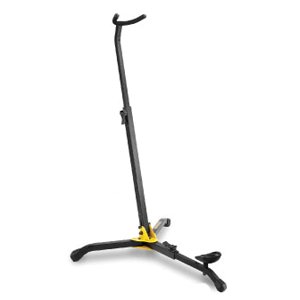
In case any readers are in the market for a bassoon stand, I ordered a Hercules DS561B stand for bassoon or bass clarinet from Amazon.com for $66.95 (shipping included), which makes it the most affordable bassoon stand available. The Hercules stand is very sturdy and secure, and I highly recommend it for home use. For schlepping, though, I prefer the more common Fox bassoon stand which weighs less than 2 pounds, compared to the much larger 6.4 pound Hercules stand.
Has anyone encountered problems finding #3 crochet thread for wrapping reeds? In Columbus it has become increasingly difficult to find the thread in formerly reliable sources such as Joann Fabrics. (Well, I can still find it, but the colors are disappointing.) I found a good internet source, Knitting-warehouse.com which sells #3 bamboo crochet thread for $2.29 per spool, in great colors!
Aunt Lydia's Bamboo Crochet Thread Size 3 Sale!
Aunt Lydia's Bamboo Crochet Thread Size 3 at discount prices! 100% bamboo from viscose is an earth friendly sustainable and renewable resource with a recycled core and label. A size 3 crochet thread with a luxuriously silky hand. 100% bamboo. Size 3. 150 yards. Machine washable.
My friend, colleague and fellow blogger David Thomas recently posted his well-informed thoughts about the changing role of the performing musician. David lists the irrefutable trends which have contributed to the financial crises for orchestras nationwide:
the slow decline in classical concert attendance since the 1960s
the aging of the audiences
the explosion of vivid competition for entertainment dollars
The third point, competition for entertainment dollars, is huge, and it largely explains the first 2 points (declining and aging audiences). The internet provides amazing options for listening to and watching world class performances anytime, anywhere. The most striking example of this is the Berliner Philharmoniker Digital Concert Hall. There are also countless performances of orchestras and chamber groups offered on YouTube free of charge.
Of course, the internet options are a double-edged sword for us musicians. An important part of our ongoing development involves listening to music, and now our options are infinite. These days there's no excuse for musical ignorance - we are able to easily find internet performances of any piece of music we are preparing. We can access world class performances of any orchestral or chamber work right now, often without spending any money. That's miraculous!
The infinite internet options (including musical performances as well as video and TV streaming and social media) potentially provide competition for live, in person orchestra performances. Internet options are an essential aspect of the social trend known as cocooning. Cocooning, quite simply, is the tendency of people to spend their leisure time at home, using computers, TVs and game consoles for entertainment.
For those who choose to buck the cocooning trend, and instead, venture out into the city of Columbus for an evening of entertainment, there are now many more entertainment options in real life as well (not just on the internet). During its peak in the 1980s and 1990s, the Columbus Symphony was one of the only acts in town, although competition had begun to materialize, as exemplified by the founding of ProMusica Chamber Orchestra in 1980. Now, the performing arts options are so numerous (including theater troupes, dance companies, opera, choral, chamber groups including chamber orchestras, jazz ensembles, and folk, world, and renaissance music groups) that local arts groups compete with one another. In addition to competing for audiences, each arts organization seeks donations from the same local businesses, foundations, and individuals.
In Columbus, I believe that there is another factor or trend which has affected the symphony:
the decline of downtown
Twenty years ago, downtown Columbus experienced incredible growth. A stunning shopping mall called Columbus City Center was built right in the heart of downtown. It was connected to the Ohio Theatre where the Columbus Symphony performs.
Columbus City Center attracted shoppers from all over the Midwest. Symphony patrons typically enhanced their concert-going experiences with shopping, dinner and drinks at Columbus City Center before and after the performances, for a true night out on the town.
This year Columbus City Center was demolished, following a dramatic decline in which most of its stores went out of business. (New malls built in the suburbs created competition which could not be overcome.)
Columbus City Center became a ghost mall as store after store shut down.
What's the solution?? What can be done to minimize the effects of these trends?
During the 1980s and 90s, the symphony was important in Columbus, since a large number of people wanted to hear live classical music, and there was no oversupply of options available for socializing and entertainment. At that time, venturing downtown was exciting, as Columbus City Center was constructed and opened. The symphony's relevance during the 80s and 90s must somehow be recaptured, perhaps by dissolving the barriers between audience and orchestra and by showing the public how the orchestra can enhance their lives in myriad ways and help define the community.
One solution is already being taken care of. The non-profit Capitol South Community Urban Redevelopment Corporation (Capitol South) has built a brand new park, Columbus Commons, on the former City Center site. I like the new (not yet finished) park, which unofficially opened this month. Despite the cold and blustery weather conditions, I've enjoyed walking through it on my way to Nutcracker performances.
Upon completion, Columbus Commons will include cafe, a fountain, a carousel, and a large concert amphitheater! Certainly there is link between the revitalization of the downtown core and the thriving of the symphony, at least here in Columbus. (Is it mere coincidence that the symphony peaked when the Columbus City Center Mall thrived, and that the mall and the symphony declined simultaneously?) I'd like to think that the grass being planted in the ground at Columbus Commons symbolizes new growth for the symphony as well as for the city.
The brand new venue for outdoor concerts in Columbus Commons could be a real shot in the arm for the Columbus Symphony. We already have a successful outdoor summer series, Picnic With the Pops, taking place at Chemical Abstracts near the Ohio State University, but our summer schedule includes a lot of free time during which we could be performing elsewhere. The more we perform, in as many different locations as possible, the more relevant we become to the community, as Columbus citizens begin to associate the ever-present symphony with various events, festivals and venues.
Community spirit is part of the reason why local orchestras still exist in spite of the internet. So many cities are proud of their symphony orchestras! Musicians of full time orchestras live in the community and provide services such as teaching and coaching for students. They perform in chamber groups as well as in the orchestra, and ideally, they are highly visible, performing all over town for many different events. Here in Columbus many orchestra musicians have performed for fundraisers for various charities (including the symphony itself). When we perform in smaller settings, we have the opportunity to really connect with the audience with conversation in addition to music. Such interaction works wonders in establishing the musicians as relevant community members.
The Columbus Symphony, along with several other U.S. orchestras, has already embraced the internet's ability to offer music anytime, anyplace. Our recordings of recent concerts are streaming on InstantEncore free of charge. Has that caused a decline in our ticket sales? On the contrary! Ticket sales remain solid, and corporate donations are increasing, perhaps due in part to the evidence that we are technologically up-to-date and therefore relevant as evidence that Columbus is on the cutting edge.
The restructuring of the administration to include the symphony under the umbrella of the successful and highly regarded Columbus Association for the Performing Arts (CAPA) was a bold move undertaken last season when the symphony faced continuing financial instability. Such innovative restructuring was an important part of the solution here in Columbus, since it reduced administrative costs and reassured civic and corporate leaders that the symphony is now well-managed. In addition, the symphony hired a new leader, our dynamic music director, Jean-Marie Zeitouni whose fine international reputation is sure to help re-establish the orchestra's relevance in the classical music world.
Collaboration with other local arts organizations is another solution which is already being implemented here. The Columbus Symphony regularly performs with BalletMet Columbus and OperaColumbus. We perform side-by-side rehearsals and concerts with the CSO Youth Orchestra, and have collaborated several times with the Columbus Gospel Choir. Hopefully more such collaborations will be part of our future, further increasing our community visibility as well as our relevance to other arts organizations.
The very obvious solution to the trend of aging audiences is to grab the attention of the children, our future audience members. It's not enough to just present concerts, any old concerts, to young audiences - we must find a way to connect, and therefore become relevant to the young concertgoers, to the point where classical music is considered an essential part of life! Conductor Leonard Bernstein created a large segment of today's audiences through his nationally televised Young People's Concerts during the 1950s and 1960s. Bernstein figured out how to make classical music fascinating, enticing and relevant. It is now the job of symphony orchestras to follow Bernstein's example and show our future audiences why our music is relevant - why 300 years ago, William Congreve wrote the poem which includes the famous quote:
Many musicians worked late last night, on Christmas Eve, myself included. I performed a church gig which featured various combinations of chorus, orchestra and organ in works by Handel, Rutter, Bach, Holst, traditional carols, and Gregorian chants. Although quite interesting, the program was not particularly bassoon oriented, so I was afforded the opportunity to just listen rather than having to worry about mastering my instrument.
A year ago I played the same Christmas Eve gig, and at the beginning of tonight's program I began having flashbacks to a year ago. My sister had been very much on my mind last year, and I remembered texting photos of the beautifully decorated church to her last Christmas Eve.
The organ in the church is one which has the ability to shake the earth - that's how powerful it is. The very talented organist performed Weihnachten, Op. 145., No. 3 by Max Reger (for solo organ) both years. During the Reger, the lights were turned off, leaving the huge church in total darkness. This year when the Reger began, I flashbacked again to a year ago. I hadn't known that it was my sister's last Christmas, because her cancer was in remission. The piece is spooky and ominous-sounding, and last night something happened as the tremendous crescendo built up. I was completely overtaken by the music, in an indescribable way which seemed to somehow involve my sister.
When she died this past fall, I didn't talk about it or even mention it to many people. I left Columbus to attend her funeral, but hardly anyone knew. A friend suggested that maybe I should write about it on this blog, and discuss what it's like to go on with business as usual at a time like this. But I couldn't. In order to keep playing the bassoon and functioning, I had to NOT think about it. There were times when the music we were rehearsing or performing would make me think of her, but in order to function as a bassoon player I had to push those thoughts away and be very businesslike.
Last night was different, though. The lights were off, nobody could see me crying, and I wasn't even playing during that portion of the service. It was the perfect opportunity to allow the music to take effect. My guess is that every person in that church was deeply affected by the organist's performance of the Reger Weihnachten, but each of us had a different issue or perspective which responded. The music performed its therapy on whatever ailed each one of us.
When I left the church last night, I could tell that I had been internally re-arranged during the Reger Weihnachten. And to think, I was paid to be there.
Favorite blog posts, September 2026
-
Hand-picked high-quality woodwind-related blog posts from around the web,
September 2026 edition.
------------------------------
If you enjoyed this blog...
Some Wonderful Music For You
-
VOCES8 is singing, so it’s pretty amazing. Stephen Paulus: Pilgrims’ Hymn
TEXT by Michael Dennis Browne Even before we call on Your name To ask You,
O God,...
MRI of an opera singer
-
This has been sitting in my drafts for nine years. Absolutely amazing, to
see how they dynamically reshape their anatomy to make the sound. And
apparentl...
13-yr old Phenom!
-
Like this video of a performance of the Weber Concerto 1st movement by
13-year old Kevin
Zephyrin.
He is competing in a competition and can win if enough ...
Garfield Plays Hindemith
-
German composer Paul Hindemith wrote more than forty sonatas. In addition
to at least one sonata for each standard orchestral woodwind, brass, and
string i...
Cello Perspectives With WFMT
-
I had the pleasure of participating in WFMT’s cello month, which is
planning to broadcast Songs My Father Taught Me on January 31st at 10:00 PM
Central Tim...